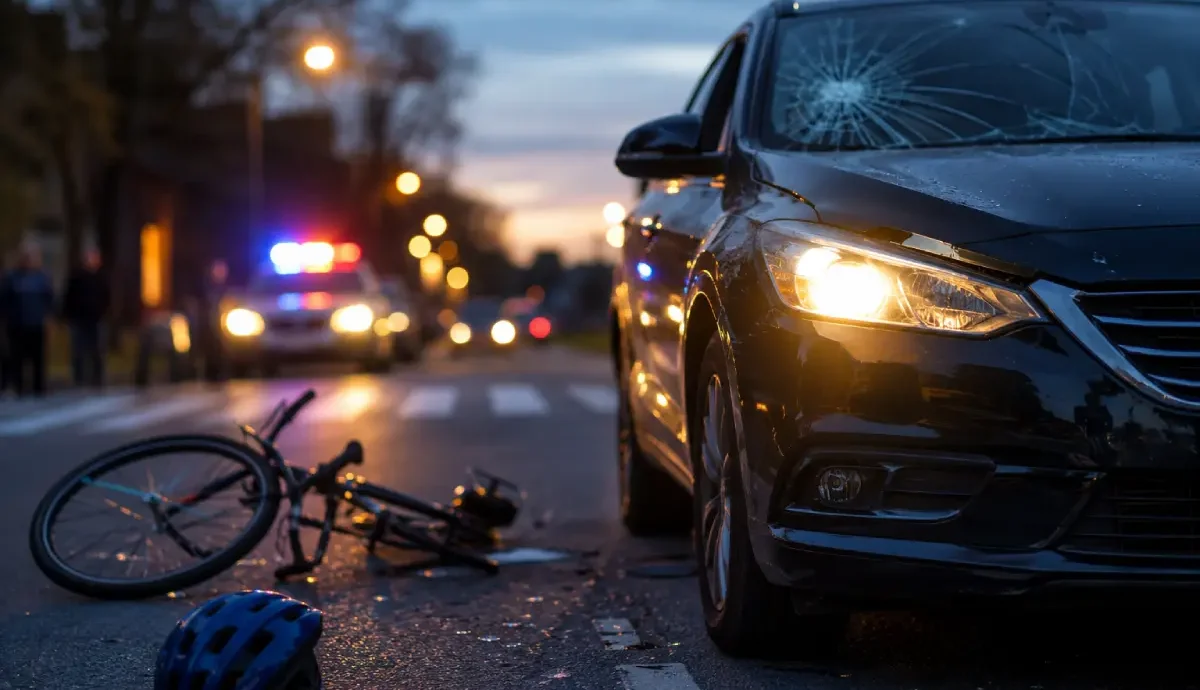
A motor vehicle collision can lead to more than traffic citations when another person is injured. A driver may face criminal liability for assault by auto if bodily injury or serious bodily injury results from the reckless operation of a vehicle. The offense is graded according to the severity of the injury and whether certain statutory enhancement provisions, such as driving while intoxicated, apply. Prosecutors often investigate these cases alongside related motor vehicle violations, including reckless driving and DWI.
This New Jersey Criminal Defense Attorneys guide explains the legal framework governing vehicular assault in NJ, including injury classifications, grading, statutory enhancements, and potential licensing consequences.
What is Assault by Auto?
N.J.S.A. 2C:12-1(c) establishes the offense of assault by auto or vessel. To obtain a conviction, the State generally must prove beyond a reasonable doubt that:
- The defendant operated a vehicle or vessel
- The defendant acted recklessly
- Another person suffered bodily injury or serious bodily injury
- The injury resulted from the defendant’s reckless operation of the vehicle or vessel
A person acts recklessly when they consciously disregard a substantial and unjustifiable risk that their conduct will produce a prohibited result. Mere carelessness or an ordinary driving error is generally insufficient to establish criminal recklessness.
Bodily Injury vs. Serious Bodily Injury
- Bodily Injury: Under N.J.S.A. 2C:11-1(a), bodily injury means physical pain, illness, or any impairment of physical condition. Even relatively minor injuries may satisfy this statutory definition if they result from reckless driving.
- Serious Bodily Injury: Under N.J.S.A. 2C:11-1(b), serious bodily injury means bodily injury that creates a substantial risk of death, causes serious permanent disfigurement, or results in protracted loss or impairment of the function of any bodily member or organ.
The distinction between bodily injury and serious bodily injury is significant because it directly affects how the offense is graded and the penalties that may apply.
Grading of Assault by Auto Charges
The grading of assault by auto depends on both the severity of the victim’s injuries and whether statutory enhancement provisions apply.
|
Circumstances |
Criminal Grade |
|
Recklessly causing bodily injury |
Disorderly persons offense |
|
Bodily injury while violating DWI statute or refusing chemical testing |
Fourth-degree crime |
|
Recklessly causing serious bodily injury |
Fourth-degree crime |
|
Proportionality |
The degree of force must correspond to the level of unlawful force threatened. |
|
Serious bodily injury while violating DWI statute or refusing chemical testing |
Third-degree crime |
Although these are the general grading provisions, every case depends on the facts presented and the evidence available to the prosecution.
How DWI or Intoxication Affects Auto Charges
The effect of DWI or intoxication on charges can be substantial. Assault by auto does not require proof that a driver was intoxicated. However, the statute provides enhanced grading when the offense occurs while violating N.J.S.A. 39:4-50, New Jersey’s driving while intoxicated law, or when a driver unlawfully refuses chemical testing under the applicable refusal statute.
As a result, conduct that might otherwise be graded as a disorderly persons offense or fourth-degree crime may be elevated to a more serious criminal offense. A defendant may also face separate prosecution for DWI in addition to assault by auto.
Reckless Driving and Distracted Driving Evidence
Reckless Driving Causing Bodily Injury
One of the most common factual allegations supporting assault by auto is reckless driving causing bodily injury. Evidence of excessive speed, aggressive driving, ignoring traffic control devices, or other dangerous conduct may be introduced to establish that the driver consciously disregarded a substantial and unjustifiable risk.
A traffic citation for reckless driving, however, does not automatically establish guilt of assault by auto. The State must still prove every statutory element beyond a reasonable doubt.
Driving While Texting
Driving while texting or otherwise using a handheld electronic device may also become relevant evidence. Depending on the circumstances, prosecutors may rely on:
- Cell phone records
- Witness testimony
- Surveillance footage
- Vehicle data
- Crash reconstruction evidence
Texting alone does not establish criminal liability. The prosecution must still prove that the driver’s conduct constituted criminal recklessness and caused the victim’s injuries.
Know more: What Counts as Assault Under New Jersey Law?
When School Zone Provisions Apply
The law contains enhanced grading provisions for certain assault by auto offenses committed while violating THE DWI statute in designated school crossings or school zones. These enhancements do not apply simply because an accident occurred near a school. Rather, the prosecution must establish that the statutory requirements for the enhancement have been satisfied.
License Suspension and Related Penalties
In addition to criminal penalties, a conviction may result in consequences affecting a driver’s operating privileges. Depending on the circumstances, a defendant may face:
- License suspension where authorized by law
- Motor vehicle penalties under Title 39
- Insurance surcharges
- Restitution obligations
- Other collateral consequences associated with a criminal conviction
If the case also involves DWI, additional licensing consequences may apply under the motor vehicle laws.
Assault by Auto vs. Aggravated Assault
Although the offenses share certain characteristics, assault by auto vs. aggravated assault in NJ involves different statutory provisions and legal elements.
|
Assault by Auto |
Aggravated Assault |
|---|---|
|
Requires operation of a vehicle or vessel |
Does not require operation of a vehicle |
|
Requires proof of reckless vehicle operation |
Mental state depends on the subsection charged |
|
Injury must result from vehicle operation |
Injury may arise from many different forms of conduct |
Depending on the facts, prosecutors may pursue different charges if separate statutory provisions are implicated.
Challenging the State's Evidence
Every criminal case depends on its unique facts. Potential legal defenses may include challenging whether:
- The defendant acted recklessly
- The alleged conduct caused the injuries
- The injuries satisfy the applicable statutory definition
- The prosecution has sufficient admissible evidence
- Constitutional violations occurred during the investigation
The availability of any defense depends on the specific evidence and circumstances of the case.
Respond Quickly to Assault by Auto Charges
An assault by auto charge can carry significant criminal, financial, and personal consequences. Depending on the facts, a conviction may result in incarceration, fines, license suspension, and a permanent criminal record. Because these cases often involve complex questions about recklessness, causation, injury severity, and related motor vehicle offenses, it is important to have experienced legal counsel evaluate the evidence and protect your rights at every stage of the proceedings.
At New Jersey Criminal Defense Attorneys, we thoroughly examine the facts of every case, challenge weaknesses in the prosecution’s evidence, and work to pursue the most favorable outcome available under the law. If you or a loved one has been charged with assault by auto, call us anytime at +1 (973) 542-9292 to schedule a free case evaluation. Early legal representation can make a meaningful difference in your defense.
Frequently Asked Questions
Does the prosecution have to prove that I intended to injure someone?
No. Assault by auto generally requires proof that you operated a vehicle recklessly and that your conduct caused the victim’s injury. The State does not have to prove that you intended to harm another person.
Can weather, road conditions, or mechanical problems affect an assault by auto case?
Yes. Evidence such as hazardous weather, poor road conditions, or an unexpected mechanical failure may be relevant in determining whether the driver acted recklessly or whether another factor contributed to the collision. The specific facts and available evidence will determine the significance of these issues in a particular case.
Can expert witnesses be used in an assault by auto case?
Yes. Both the prosecution and the defense may present experts, including accident reconstruction specialists, medical experts, or forensic professionals, to address issues such as causation, vehicle speed, or the extent of the victim’s injuries.
Is a guilty plea to reckless driving the same as pleading guilty to assault by auto?
No. Reckless driving is a motor vehicle offense under Title 39, while assault by auto is a criminal offense under the New Jersey Criminal Code. A plea to one offense does not automatically resolve the other.
Can assault by auto charges be filed after the accident investigation is completed?
Yes. Criminal charges are not always filed immediately. Law enforcement may wait until the investigation, witness interviews, accident reconstruction, or medical evaluations are complete before determining whether criminal charges are warranted.